Contact
Contact Lening Li — email and office at the Harvard Science and Engineering Complex, Allston, MA.

Contact Lening Li — email and office at the Harvard Science and Engineering Complex, Allston, MA.
Curriculum vitae and one-page resume of Lening Li (English and Chinese), compiled from the latest LaTeX source.
Education of Lening Li: MBA at Carnegie Mellon (Tepper), Ph.D. and M.S. degrees from WPI, B.E. and B.A. from Harbin Institute of Technology.
Research, industry, and advisory experience of Lening Li: Yale University, Harvard University, Symbotic, Berkshire Grey, Rudolph Technologies, Neusoft.
Robotics engineer and researcher — reinforcement learning, optimal control, game theory, and formal methods.
A searchable list of classic computer science and robotics books, and side projects by Lening Li: LineupIQ, MulVAL to PDDL, and PDDL Parser.
Publications by Lening Li — conference and journal papers on temporal-logic planning, reinforcement learning, game-theoretic security, and humanoid robotics, with PDFs and BibTeX.
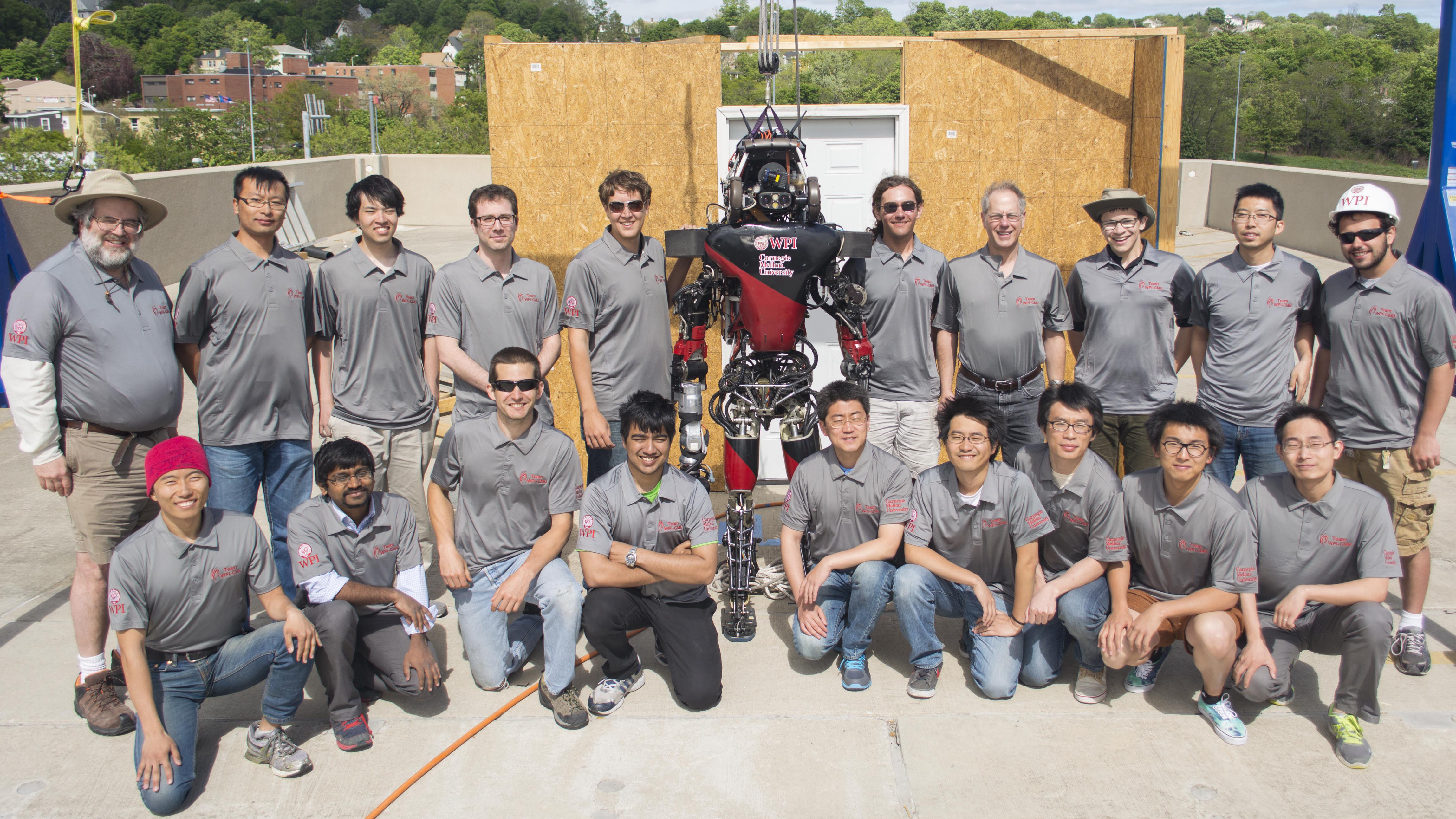
Research by Lening Li: reinforcement learning and optimal control under temporal-logic specifications, hypergames for cyber-physical security, anytime motion planning, and the DARPA Robotics Challenge.
Academic service, leadership and honors of Lening Li: journal and conference reviewing, WPI Graduate Student Government presidency, memberships and awards.
Teaching and mentoring by Lening Li: WPI robotics and computer-vision courses, Harvard research advising, and VEX / FIRST robotics coaching.
Places Lening Li has travelled for conferences and collaborations.
Motion planning for nonlinear robotic systems is computationally intractable in general (PSPACE-hard), so approximate schemes — discretization-based (A*) and sampling-based (RRT*) — dominate practice. We explore a third approach: function approximation, which transforms planning in the state space into planning in a low-dimensional parameter space of policy function approximators.
In an adversarial environment, information — and the lack of it — is decisive for strategic decision-making. We developed a class of hypergames on graphs to model the interaction between an intelligent robot and its adversary when the task is given in temporal logic and the two players hold asymmetric information.
The goal is a model-free reinforcement learning method for stochastic planning under temporal logic constraints — so that a robot can be given a high-level task and return a policy that provably satisfies it.